How to Review a Premium Travel Card Before the Annual Fee Hits
A repeatable review process for deciding whether a premium travel card still earns its annual fee through credits, lounge value, protections, and real usage.
TL;DR
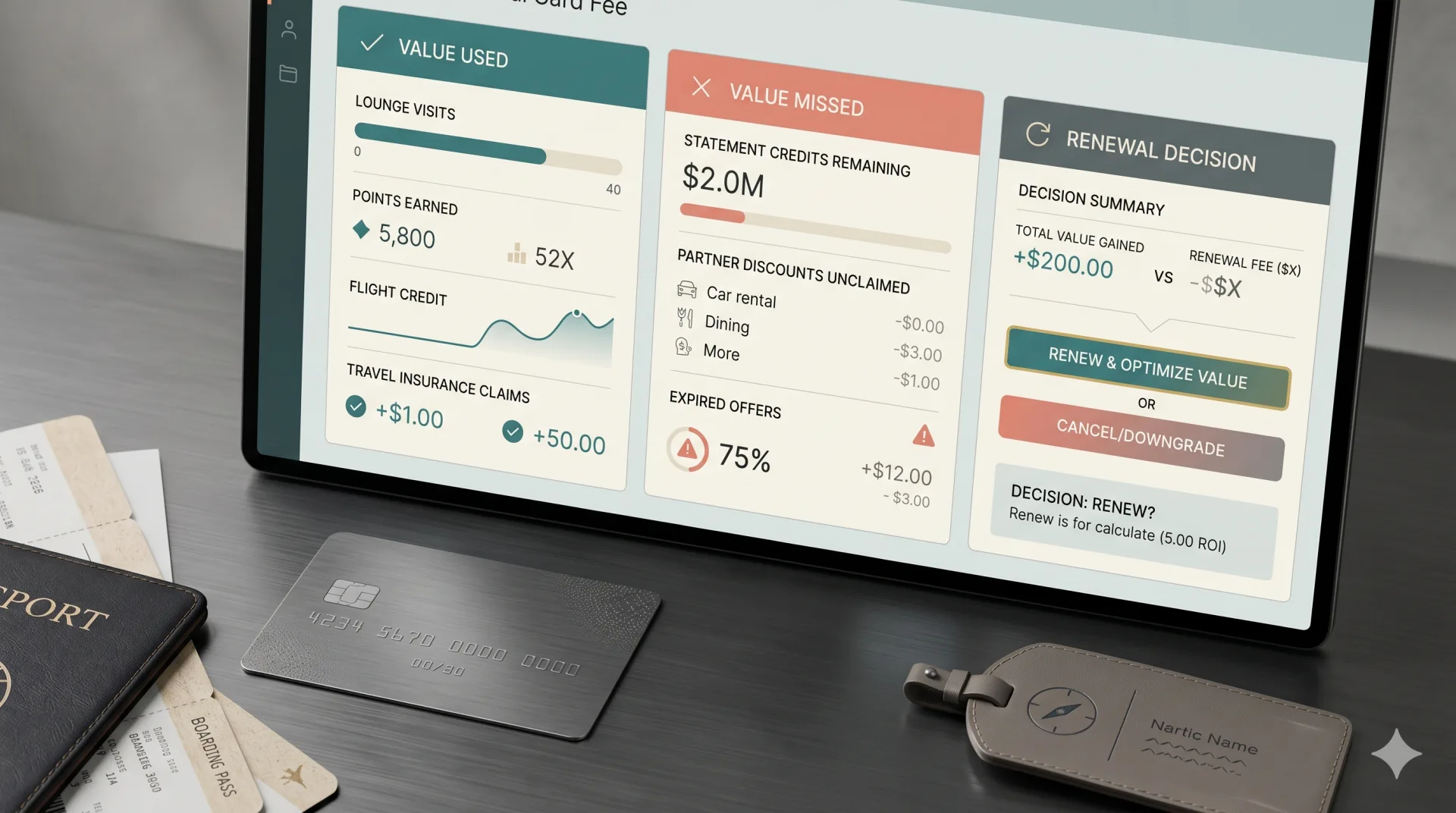
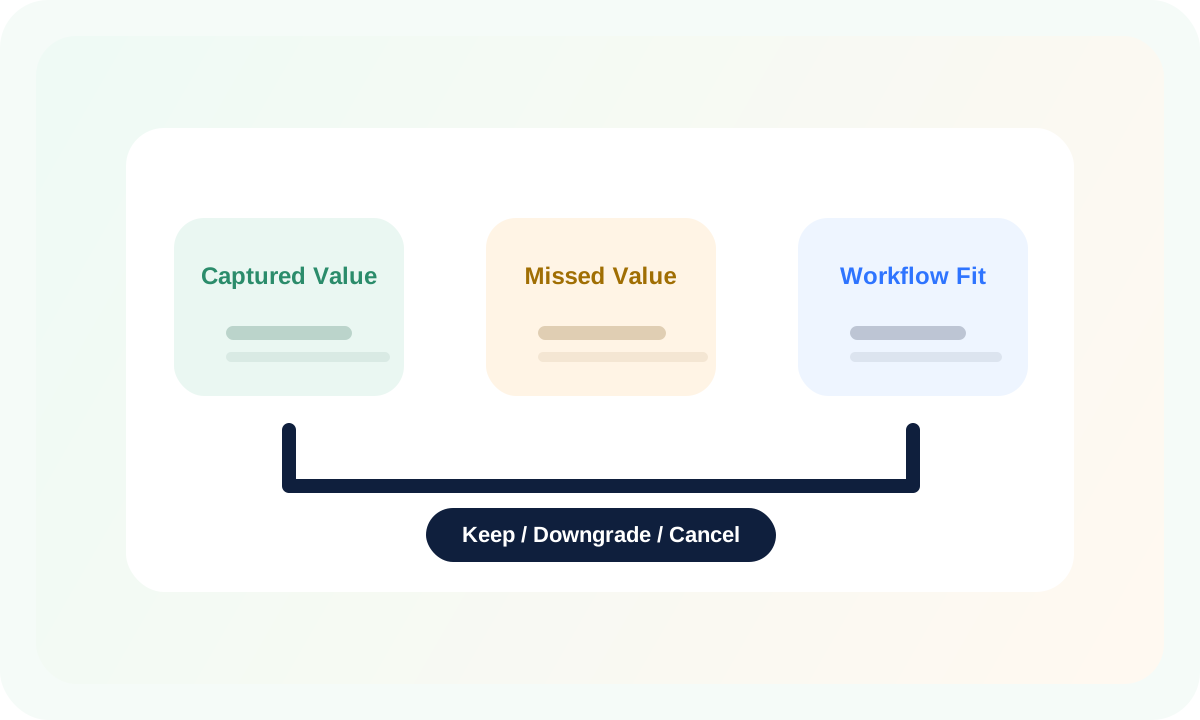
A strong premium-card annual-fee review starts with value you actually used, then looks at missed value and workflow fit before you decide to keep, downgrade, or cancel.
- Review claimed credits separately from theoretical value.
- Unclaimed benefits are a workflow problem and should count against the card.
- Downgrade or cancel decisions get easier when every perk already has a usage history.
Annual-fee review checklist
- Count credits and benefits you actually used.
- Separate near-misses from benefits that never really fit.
- Distinguish routine value from rescue-value protections.
- Choose keep, downgrade, product change, or cancel before the fee posts.
Weak review vs strong review
| Category | Weak review | Strong review |
|---|---|---|
| Benefit value | Counts face value whether used or not | Starts with value actually captured |
| Missed perks | Ignored as user error | Used to diagnose workflow fit |
| End result | Vague feeling about the card | Clear keep, downgrade, or cancel decision |
Start with value you actually captured
Annual-fee reviews go wrong when every perk is counted at face value whether or not it was used. The more honest starting point is captured value: credits redeemed, protections used, lounge visits taken, and fees avoided.
That number is not the whole story, but it prevents you from giving a card full credit for benefits that existed only on paper.
Then look at the value you almost lost
Near-misses are important because they reveal whether the card fits your current workflow. If a benefit would have been useful but you repeatedly forgot it, the card may still be misaligned with how you operate.
That is why a benefit tracker matters for renewal decisions. It shows which value was missed because the perk was weak and which value was missed because your system was weak.
Separate everyday value from rescue value
Some perks create routine value, such as recurring credits. Others matter only when something goes wrong, such as travel protections or purchase coverage.
A solid review keeps those categories distinct. That makes it easier to decide whether the card is valuable because you use it often or because it protects high-cost moments.
Choose the next action before the fee posts
The end goal is not analysis for its own sake. It is a clear action: keep, downgrade, product change, or cancel.
If your tracking system already records which benefits were used across the year, that decision becomes a short review instead of a messy reconstruction exercise.
Keep exploring
Frequently asked questions
How do I know if a premium travel card is worth the annual fee?
Start with the value you actually captured, not the face value of every listed perk. Then look at the value you missed and whether the card still fits your current workflow.
Should missed benefits count against the card?
Yes. If a benefit exists but you repeatedly fail to use it, that should count against the card unless your system is likely to improve soon.
What decision should come out of an annual-fee review?
The review should end in a concrete next step: keep, downgrade, product change, or cancel.
Before you act
- Card perks, credits, and issuer terms may change over time.
- Verify current annual-fee details and benefit rules directly with the issuer before making a keep, downgrade, or cancel decision.
- This article is for informational purposes only and is not financial advice.
Turn this into a repeatable workflow
Perkmon is built for the operational side of credit card perks: what is still available, what has already been used, and what needs attention before value disappears.
Related articles
How to Find Award Flights With Credit Card Points
Find award flights with credit card points: search flexible dates, compare free and paid tools, and confirm the flight before transferring points.
Read articleStrategyA Credit Card Benefits Tracker Checklist That People Actually Keep Updated
The best benefits tracker is the one you can review in minutes before value disappears. Start with card inventory, reset timing, and a live used-vs-unused status.
Read articleStrategyBest Credit Card Tracker App: What to Look For Before You Choose
Compare credit card tracker apps by the workflows that matter most: monthly reviews, trip prep, and annual-fee decisions.
Read article