A Credit Card Benefits Tracker Checklist That People Actually Keep Updated
Build a practical system for tracking statement credits, lounge access, protections, and expiring perks without relying on memory or a messy spreadsheet.
TL;DR
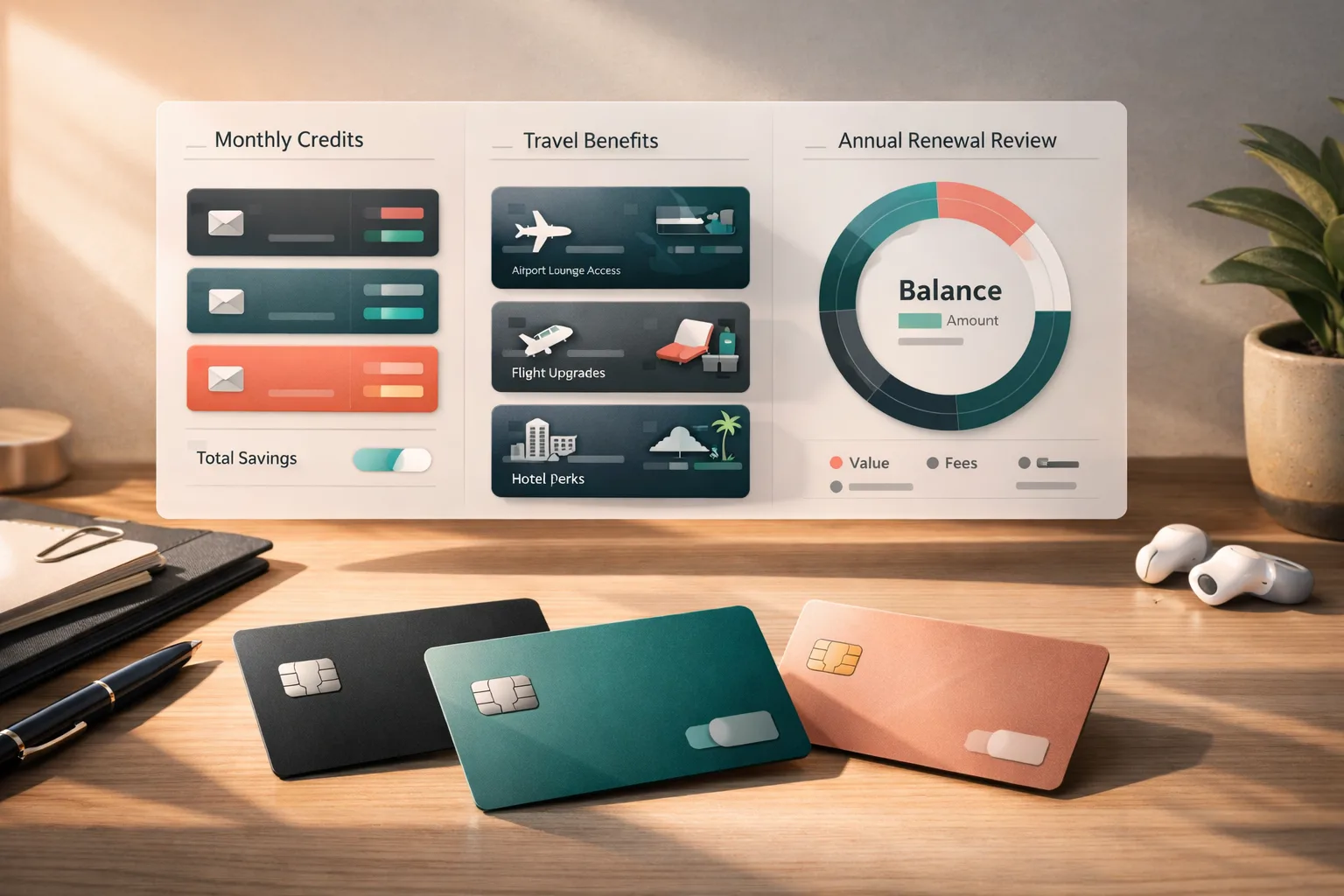
A useful credit card benefits tracker should show every active card, the benefits that matter, when each one resets, and whether it is still unused. If those details are not visible in one place, the tracker is still too heavy.
- Track reset timing, not just benefit names.
- Mark every benefit as used or unused so the remaining value is obvious.
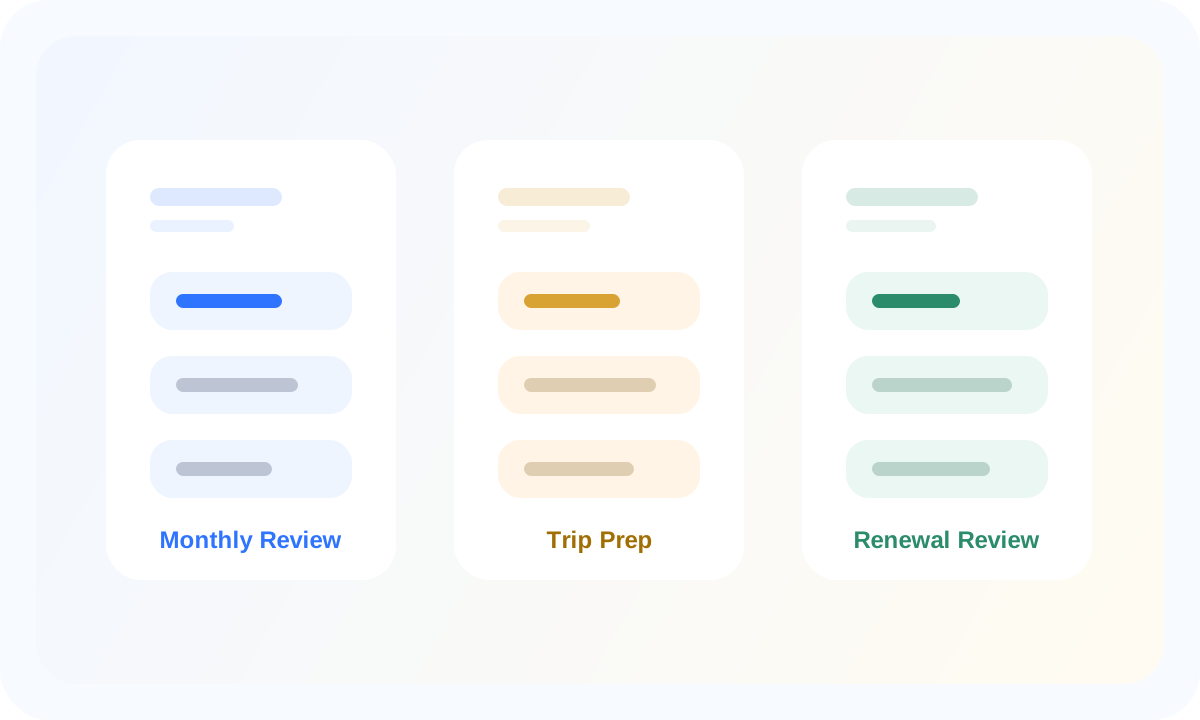
- Review by workflow: monthly credits, pre-trip benefits, and annual-fee decisions.
Quick checklist
- List every active card you actually keep.
- Track reset timing for every recurring credit and benefit.
- Mark each benefit as unused, partially used, or completed.
- Review monthly credits, pre-trip benefits, and annual-fee decisions on separate rhythms.
Static list vs actionable tracker
| Category | Static list | Actionable tracker |
|---|---|---|
| Reset timing | Easy to miss or store in a separate note | Visible next to the benefit itself |
| Usage status | Usually unclear without extra checking | Immediate used vs unused visibility |
| Review workflow | One giant reference list | Monthly, pre-trip, and renewal reviews stay separate |
Why most perk trackers fail
Most people do not lose value because they forgot a card existed. They lose value because their system does not match how benefits behave in real life.
A static list of perks looks complete, but it still leaves out the details that matter in the moment: what resets this month, what already got used, and what should be checked before the next trip or renewal.
The three fields every tracker needs
A useful tracker starts with a card inventory, but it becomes actionable only when each benefit includes timing and status.
That means every row or card view should answer three questions immediately: what the benefit is, when it resets, and whether it is still available.
- Benefit name and issuer context
- Reset cadence such as monthly, quarterly, semi-annual, or annual
- Current status such as unused, partially used, or completed
Organize your review rhythm around behavior
Recurring credits should be checked on a monthly cadence. Travel protections and lounge access should be reviewed before booking or flying. Annual fee decisions need a separate renewal review.
Once your tracker reflects those rhythms, you stop needing perfect memory. You only need a system that surfaces the next action at the right time.
What a better setup looks like
Whether you use Perkmon or another system, the target state is the same: one place to see all cards, all meaningful perks, and which value is still unclaimed.
If your current tracker takes longer to interpret than it takes to use a credit, the system is still too heavy.
Keep exploring
Frequently asked questions
What should a credit card benefits tracker include?
At minimum, it should include the card, the benefit name, the reset cadence, and the current status such as unused or completed. Without timing and status, the tracker stays informational instead of actionable.
Why do most perk trackers fail?
They fail because they behave like static lists. People usually need a system that shows what needs attention this month, before a trip, or before an annual-fee decision.
Is a spreadsheet enough for tracking card benefits?
A spreadsheet can be enough for a small portfolio, but it becomes fragile once recurring credits, travel protections, and annual review timing all need to stay current together.
Before you act
- Credit card benefits and issuer terms can change.
- Verify current benefit details directly with the issuer before acting on them.
- This article is for informational purposes only and is not financial advice.
Turn this into a repeatable workflow
Perkmon is built for the operational side of credit card perks: what is still available, what has already been used, and what needs attention before value disappears.
Related articles
Best Credit Card Tracker App: What to Look For Before You Choose
Compare credit card tracker apps by the workflows that matter most: monthly reviews, trip prep, and annual-fee decisions.
Read articleAnnual FeesHow to Review a Premium Travel Card Before the Annual Fee Hits
The smartest annual-fee review is not emotional and not purely theoretical. It looks at claimed value, unclaimed value, and how often the card changed real behavior.
Read articleCard GuideHow to Track Amex Platinum Credits Without Rebuilding the System Every Month
Track Amex Platinum credits by separating monthly, travel, and annual benefits so the card stays easy to review between trips and renewals.
Read article